The BRS Hall of Fame acknowledges the contributions of BRS members (past and present) to the society and the field of musculoskeletal research.
If you wish to nominate an individual for the BRS Hall of Fame, please send a 200-300 word statement describing the nominee and their contribution to the society and musculoskeletal research, to info@boneresearchsociety.org. BRS Hall of Fame Inductees are introduced by their nominator at the annual meeting.
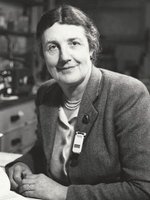
Dame Janet Vaughan was the first female president of the Bone and Tooth Society (1966-1971) who formed and led the MRC unit at Oxford for research on bone metabolism, specifically bone-seeking isotopes for 20 years. She became a recognised world authority on the effects of plutonium, publishing books on the subject including “The Physiology of Bone” (1970) and “The Effects of Radiation on the Skeleton” (1973).
After witnessing the impact of poverty on health whilst working in London’s poorer areas during her medical training at UCL, Vaughan developed an interest in malnutrition and how this might be mitigated. As a woman doctor in early 1900s, Vaughan had difficulties gaining access to both patients and mice for her studies. Instead, she performed ground-breaking research on vitamin B12 in the blood … on pigeons, the impact of which was not fully acknowledged for over 50 years. She developed a system for separating, storing and moving blood, designed Britain’s first national blood banks and ran blood supply services for north-west London. Her development of safe and sterile ways to store and transport blood included modified milk bottles and ice cream vans in the early years. She also developed a system encouraging ongoing blood donation to ensure an ever-ready blood supply. This became crucial during the UK’s preparations for the Second World War, where she was instrumental in setting up mass blood donation and transfusion.
After the war, she was sent to Belgium and Germany as the head of a MRC team to perform research in the Bergen-Belsen concentration camp (similar to Charles Dent), where she significantly improved the strategy to feed people suffering from extreme starvation. On returning to the Churchill Hospital, Oxford, her work evolved to study the effects of radiation on the blood, bone and bone marrow. She contributed to national committees recognizing the economic problems in providing for old age and in establishing equal pay. In later years, she became Principal of Somerville College, Oxford, fighting to have women’s colleges accepted as full Oxford colleges, and to increase the science/medical undergraduate intake. When interviewed for BBC’s ‘Women of our Century’ programme she indicated that ‘I would like to be remembered as a scientist, but as one who combined work with a normal life’.
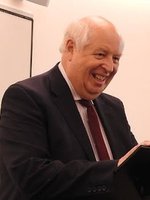
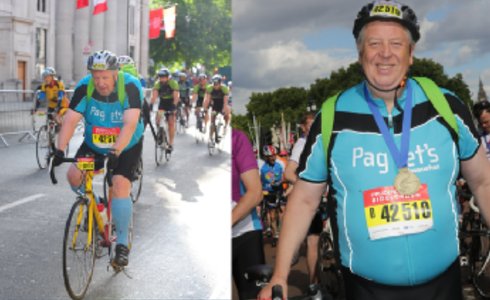
Throughout an impressive 42-year career which began with a Biochemistry followed by Medical degree from Glasgow University, Bill made significant contributions to the field of bone reserach, developing crucial diagnostic assays and refining treatments for metabolic bone diseases. His research extended into bone and cancer biology, resulting in over 650 publications, four book chapters, and seven patents. His collaborative work with sports scientists provided valuable insights into the impact of exercise, diet, and vitamin D on athletic performance and injuries. He also maintained a longstanding collaboration with the UK Ministry of Defence, contributing significantly to the evidence base for improving the health of military personnel.
Bill spent two decades as Head of the Metabolic Bone Disease Unit at the Royal Liverpool University Hospital before moving to Norwich University Hospital at the University of East Anglia, where he became Dean of Norwich Medical School in 2018.
He served as a senior examiner for the Royal College of Pathologists and a member of the Endocrinology and Immunoassay Scientific Advisory Group and contributed expertise to the Royal Osteoporosis Society, Parathyroid UK, the National Institute for Health and Care Excellence (NICE) and Paget’s Association. He also held significant roles as a Director for the Supra-Regional Assay Service and Chairman for the NEQAS Specialist Advisory Group for Bone Markers, and has been recognized with (amongst others) the Robert Forbes Buchanan McKail Prize in Psychiatry, a Marcella Doran Scholarship and ACB Laboratory Medicine Foundation Award.
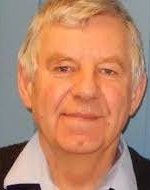
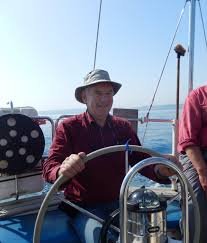
Professor Allen Goodship graduated from Bristol Veterinary School in 1972 and, after a short stint in mixed practice, returned to pursue a PhD under Lance Lanyon. During a transformative period in bone biology, Allen's work on ulnar osteotomy models helped establish the foundational understanding of how bone adapts to mechanical strain. This research, alongside parallel studies by Jiří Heřt in Prague, laid the foundation for the now widely accepted concept of bone as a mechanosensitive organ—constantly remodelling in response to the mechanical environment, a principle known as Wolff’s Law.
Remaining at Bristol, Allen progressed from lecturer to professor, leading the Comparative Orthopaedic Research Unit (CORU). Here, his studies advanced understanding of how tendons and joints adapt to movement, and his work helped shift rehabilitation strategies from immobilisation to mechanically informed recovery protocols. His contributions also extended to aerospace research, including weightlessness studies aboard a parabolic flight, and input into MIR space station experiments providing insight into disuse osteopenia.
In 1996, Allen moved to a joint role at the Royal Veterinary College (RVC) and University College London’s Institute of Orthopaedics where he worked until his retirement and then as Professor Emeritus. He was an early adopter of interdisciplinary research, combining veterinary science, biomechanics, orthopaedics, and aerospace medicine. His research had significant translational impact, helping to inform Orthopaedic surgery and post-operative care, rehabilitation protocols for tendon and bone injuries, and guidelines for astronauts to mitigate skeletal deterioration during spaceflight.
With over 380 publications and 16,700 citations, Allen was a revered mentor and teacher, known for his humour, enthusiasm, and ability to foster collaboration. He influenced many students and colleagues in the bone field who went on to distinguished careers in research, academia, and clinical practice.